Resource Center
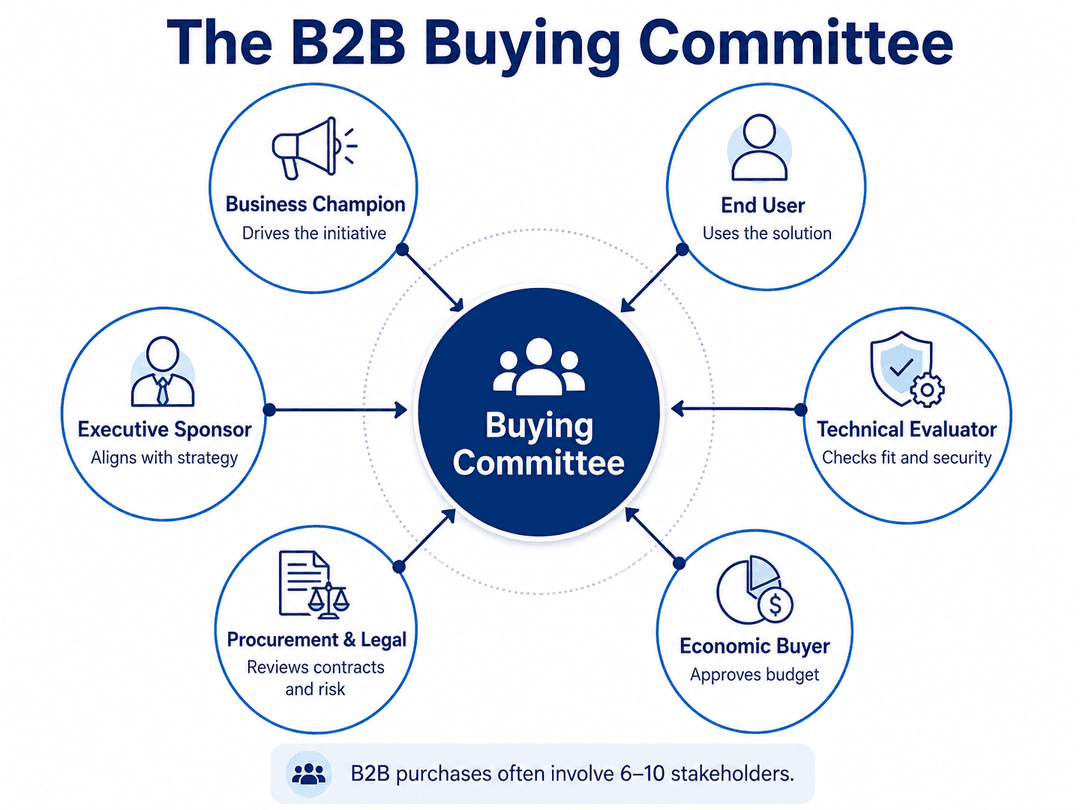
B2B purchasing decisions are rarely made by a single individual. Instead, they involve buying committees made up of business champions, end users, technical evaluators, economic buyers, procurement and legal teams, and executive sponsors. Each stakeholder brings different priorities, concerns, and influence to the decision-making process. This blog explains why B2B marketers must move beyond single-contact targeting and engage the full buying committee. By reaching multiple decision-makers across an account, marketers can build stronger awareness, address objections earlier, create internal consensus, and help sales teams generate higher-quality opportunities and accelerate pipeline.
For years, Marketing Qualified Leads (MQLs) have been the primary metric used to evaluate B2B marketing performance. But as enterprise buying behaviors have evolved, lead volume alone no longer reflects marketing's true impact on business growth. Today's buyers conduct extensive research, involve multiple stakeholders, and engage with brands across numerous channels before making a purchasing decision. In this article, we explore why leading B2B organizations are shifting their focus from MQLs to qualified pipeline, how this change is transforming demand generation strategies, and what marketing leaders can do to better align their programs with sales, revenue, and long-term business outcomes.
A global FAANG organization partnered with TechPRO to design and execute a scalable, account-focused demand generation engine across two core product lines. While the client elected not to disclose its brand publicly, success was measured strictly by outcomes—specifically our ability to generate qualified sales opportunities from high-value IT and line-of-business decision makers within complex enterprise buying committees.

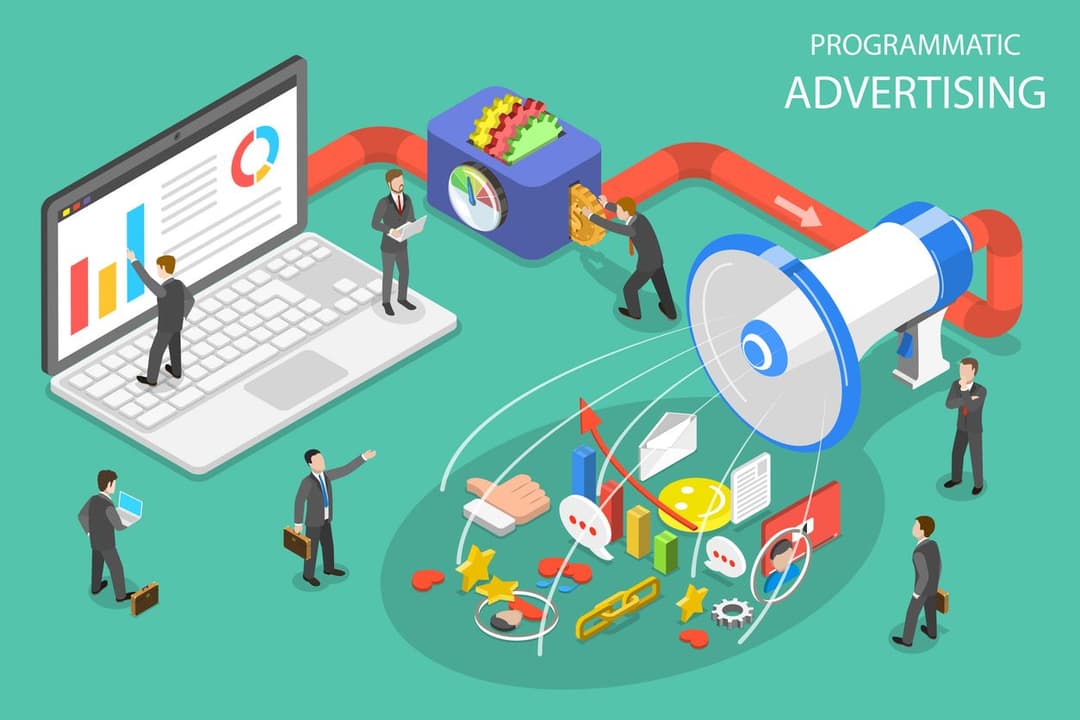
Content syndication has long helped marketers put high-value assets like whitepapers, webinars, analyst reports, and solution briefs in front of B2B buyers. But in a world where buying committees are larger and more digitally dispersed, syndication alone doesn’t guarantee that your content reaches all the relevant decision makers inside your target accounts. That’s where programmatic advertising delivers a critical lift: it extends the reach of syndicated content and delivers it across digital touchpoints tied to specific accounts and personas. Programmatic excels in precision, sequencing, and visibility. By integrating intent signals, firmographics, and ABM lists into programmatic campaigns, marketers can serve tailored messaging that reinforces each stage of the buyer journey.
AI has transformed content marketing. Marketers can now generate blogs, emails, social posts, ads and even entire sites at a speed and scale that once seemed impossible. But as AI-powered content floods every channel, a new challenge has emerged: standing out. In this environment, authenticity has become one of the most critical drivers of trust, engagement, and long-term impact.

As I’m winding down 2025, I’ve been taking time to reflect on the past year and establish the right priorities for 2026. The B2B marketing space has gotten a lot more cluttered and noisy and it’s now harder to stand out. For 2026, my recommendation for all marketers is to focus on trust. Earn it. Keep it. Most importantly, deserve it. In today’s B2B environment, trust is not built over time—it is assessed instantly. For marketing executives, this reality fundamentally reshapes how demand generation, brand, and sales teams must operate.

I run across this issue quite frequently at TechPRO: Clients are only interested in acquiring senior decision makers such as Director-level. Although Directors are a more attractive target, Managers are also integral in the buying process. While Executive and Directors ultimately approve purchases, Managers are the ones who identify problems, research solutions, and shape internal recommendations.

I admit it. I used to dread it when the conversation with clients came up on implementing a lead management platform. I thought it would be overkill and too time-intensive and the existing process of uploading lead data files to an SFTP or emailing a password-protected file was sufficient. But over time, I have learned to appreciate the importance of a lead management system such as Integrate and Convertr. What changed my initial opinion was that over the last several years, the B2B marketing landscape has become a lot more complex and marketers are under pressure to generate high-quality leads and prove measurable ROI.
Content Syndication is one of the most powerful strategies for expanding your audience reach, improving brand visibility, and generating quality leads. By distributing your content on third-party platforms, you expose your content to a wider audience, which can result in increased traffic and engagement. However, to maximize the impact of your content syndication efforts, a well-defined strategy is essential. Review some of the best content strategies to boost lead generation through content syndication.

Having worked in B2B lead generation for nearly two decades has given me valuable insight into what successful organizations are doing to find new customers and drive more revenue. Read some top tips that I hope can enhance your lead generation and drive more customers.

According to a recent study by Pipeline360, only 34% of B2B marketers surveyed were using Content Syndication for lead generation. I find this alarming as CROs and B2B Marketers are leaving good money on the table. Content Syndication can be a highly effective strategy for B2B marketing, offering several advantages over paid search, social media, digital display advertising and other marketing channels.
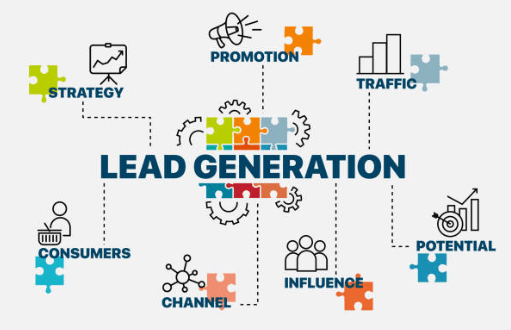
Congratulations! You’ve acquired a lead from a paid search campaign or a content syndication partner. Now comes the critical work to nurture that lead with the goal to eventually convert it into a paying customer.

If you’re new to B2B demand generation, content syndication might sound like one of those buzzwordy tactics that only consultants and agencies talk about. The good news? It’s actually a very straightforward way to get your best content in front of the right prospects without waiting for them to find you.